
How to Measure for the Perfect Fit in Arula Jeans
Finding jeans that fit well starts with accurate measurements, not guesswork. We designed Arula jeans around real body proportions, but knowing your own dimensions before you order makes all the difference between a perfect fit and a return.
This guide walks you through the four measurements that matter most—waist, hip, rise, and inseam—and shows you how to take each one at home with tools you already have.
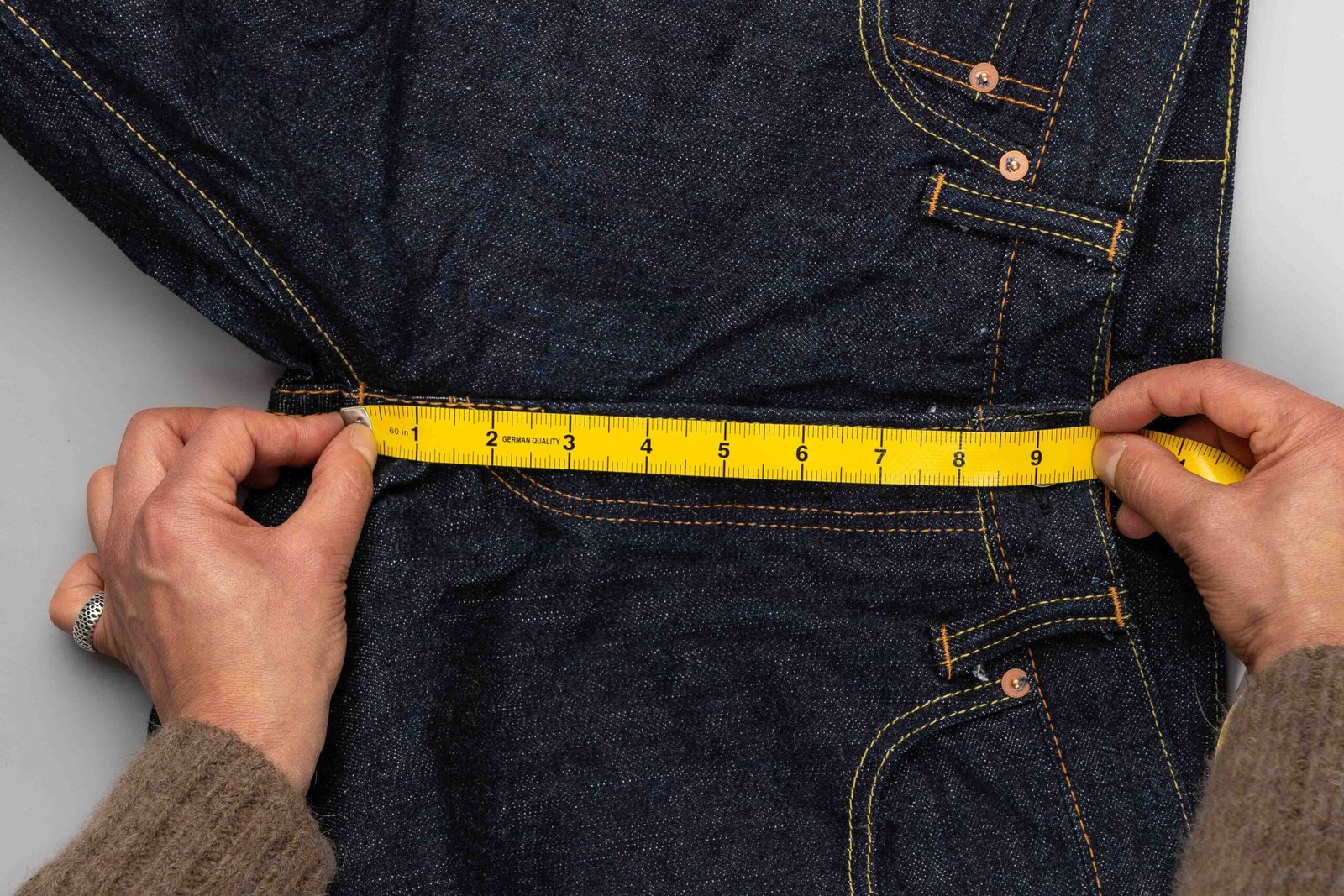
What You’ll Need Before You Start
A fabric measuring tape is the only tool you really need. The flexible kind used for sewing works best because it follows your body’s contours without gaps.
If you don’t have one, a length of non-stretch string and a ruler will work—wrap the string around the area you’re measuring, mark where it meets, then measure that length flat against the ruler. Avoid using a metal tape measure; the rigidity creates inaccurate readings on curved surfaces.
Wear fitted clothing or measure over bare skin. Bulky layers add phantom inches that throw off your numbers.
How to Measure Your Natural Waist
Your natural waist sits roughly an inch above your belly button, at the narrowest part of your torso. This is not the same spot where most jeans sit—it’s higher.
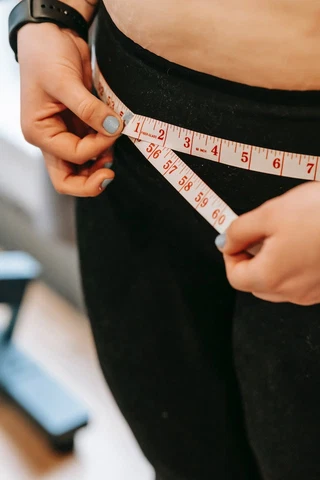
Stand up straight and wrap the tape around your waist without pulling it tight. The tape should lie flat against your skin and feel snug but not compressive. Read the measurement where the tape overlaps, and write it down immediately.
Measuring after a meal or while slouching will give you a number that’s too large. Take this measurement in the morning before eating for the most consistent result.
Finding Your Hip Measurement
Your hips are measured at the fullest part of your seat, typically seven to nine inches below your natural waist. Stand with your feet together and wrap the tape around the widest point.
The tape should stay parallel to the floor all the way around. If it rides up in the back or dips in the front, you’re measuring at an angle and the number will be off.
This measurement determines how our jeans fit through the thigh and seat. A hip measurement that’s too small leads to jeans that bind when you sit; one that’s too large creates excess fabric that bunches.
Measuring Rise: Front and Back
Rise is the distance from the crotch seam to the top of the waistband. It controls where the jeans sit on your body—low, mid, or high.
To measure front rise, sit in a hard chair and place the end of the tape at your natural waist in the front. Run the tape down between your legs to the chair seat, keeping it pressed against your body. For back rise, start at your natural waist in the back and measure down to the same point.
Our sizing system accounts for rise variation across body types, which is why two people with the same waist measurement can need different letter codes.
Inseam: The Length from Crotch to Ankle
Inseam determines how long the pant legs are. Measure along the inside of your leg from your crotch straight down to the floor, or to wherever you want the hem to hit.
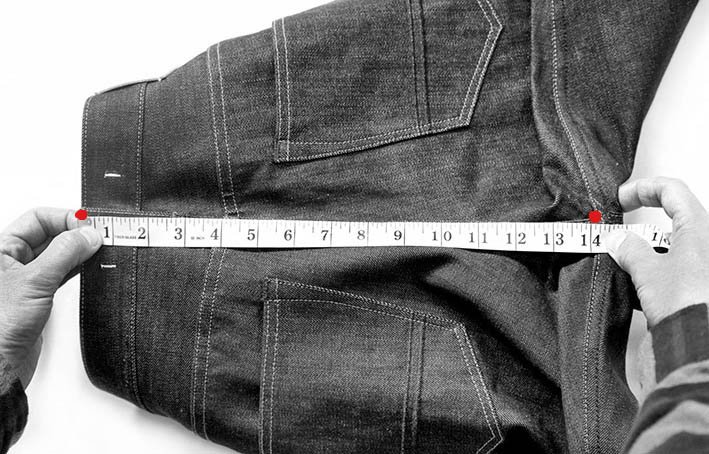
Stand barefoot with your feet shoulder-width apart. If you’re measuring alone, use a pair of jeans that already fit you well—lay them flat and measure from the crotch seam to the bottom of the leg along the inseam.
Most of our styles come in multiple inseam lengths. If you fall between two standard lengths, size up—hemming is easier than adding fabric.
Why Accurate Measurements Matter
Taking five minutes to measure correctly saves the hassle of returns and the disappointment of jeans that don’t fit. Arula jeans are cut to follow your body’s real proportions, not outdated vanity sizing, so your measurements translate directly into a fit that works.
Once you know your numbers, ordering becomes straightforward. Keep a note of your measurements somewhere accessible—your phone, a drawer, wherever you’ll remember it next time you’re shopping.
Common Questions About Measuring for Arula Jeans
Measure over bare skin or very thin, fitted clothing like leggings or a tank top. Thick fabrics add bulk that skews your numbers, and you’ll end up ordering jeans that are too large.
If you’re uncomfortable measuring on bare skin, wear something form-fitting with no seams or elastic at the measurement points.
This is common, especially if you have a defined waist-to-hip ratio. In that case, choose the size that matches your hip measurement—the waist can be taken in by a tailor, but tight hips can’t be fixed without reconstructing the jeans.
Our A, B, C, and X codes within each numeric size are designed to handle different body proportions, so you may find a better match by adjusting the letter rather than the number.
Re-measure anytime your weight changes by more than five pounds, or if it’s been more than six months since your last measurement. Bodies shift with activity level, diet, and age.
If you’ve been wearing the same size for years without checking, there’s a good chance your measurements have changed even if your weight hasn’t.
You can, but it’s less accurate. Jeans stretch, shrink, and wear unevenly over time, so the dimensions printed on the tag may not match what they actually measure now.
If you do measure an existing pair, lay them flat and measure the waist straight across from side to side, then double that number. For inseam, measure along the inner leg seam from crotch to hem.
Yes. Waist measurements can fluctuate by up to an inch depending on hydration, meals, and bloating. For the most consistent results, measure first thing in the morning before eating or drinking.
Hip and inseam measurements are more stable, but posture still matters—always stand up straight with your weight evenly distributed.
Jeans typically sit lower on the body than dress pants, so the rise measurement matters more. Dress pants are often cut higher and looser through the hip, while jeans are designed to fit closer to your actual body shape.
If you’re used to buying dress pants by waist size alone, you’ll need to add hip and rise measurements when shopping for jeans to get an accurate fit.