
How to Choose Wide Calf Cowboy Boots That Actually Fit — Arula Guide
Wide calf boots shouldn’t squeeze or gap — they should pull on smoothly and sit flush against your leg without cutting in at the top. Most cowboy boot brands design around a standard calf circumference, which leaves shoppers with athletic or naturally fuller calves hunting for something that actually fits.
We built our Arula cowboy boots with real leg shapes in mind, not an industry average. This guide walks through how to measure your calf, what shaft circumference and boot height matter for comfort, and which construction details make the difference between a boot that fits and one that doesn’t.
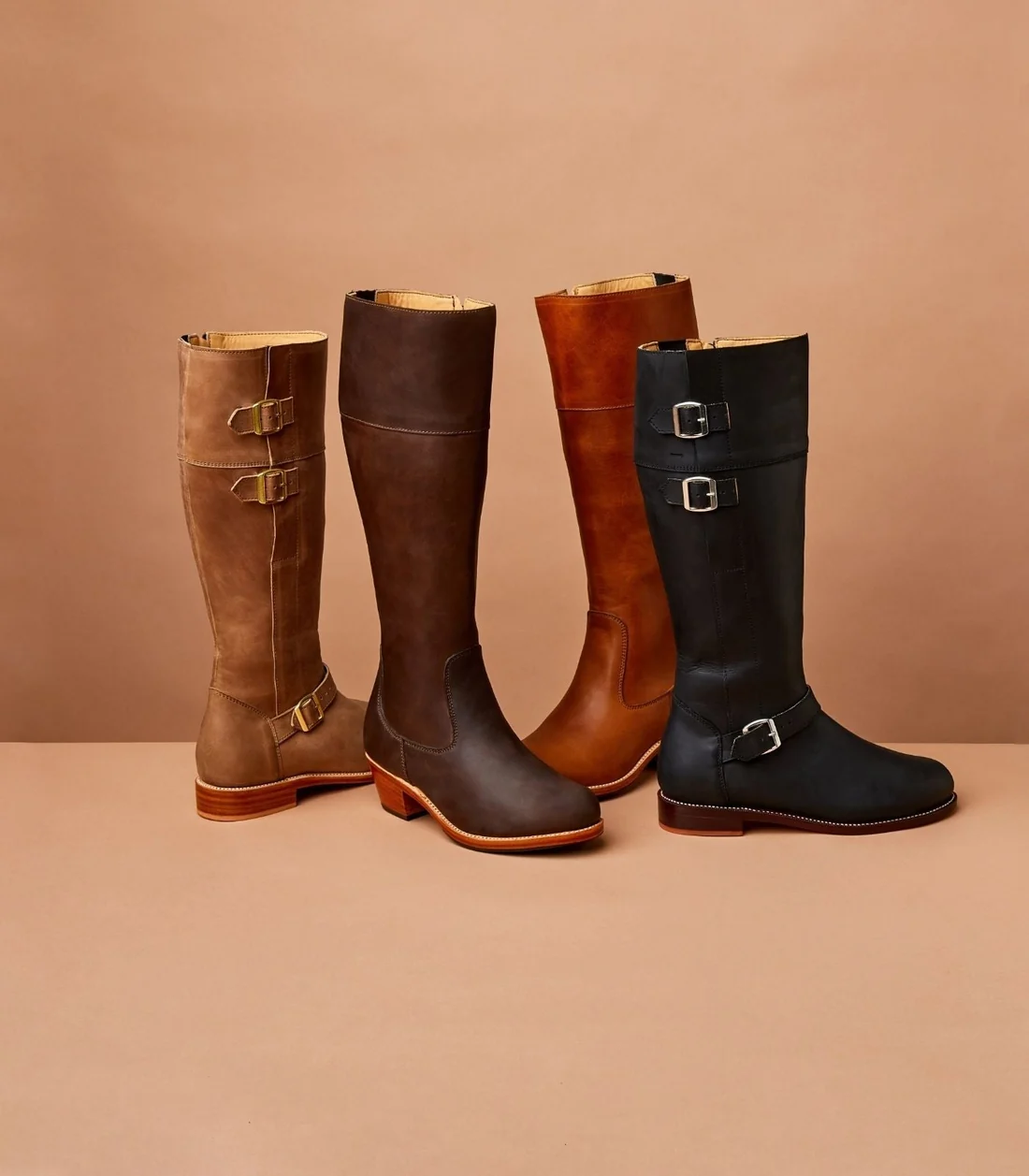
Measure Your Calf Circumference the Right Way
Grab a soft measuring tape and stand with your weight evenly distributed. Measure around the widest part of your calf — not at the ankle, not at the knee, but at the fullest point of muscle. Write down that number in inches.
Now measure where the top of the boot shaft will sit when you’re wearing them. For most mid-height cowboy boots, that’s roughly 12 to 13 inches up from the floor. This second measurement tells you whether the boot will be snug at the calf or at a narrower spot higher on the leg. The Arula Size Chart Guide: How A, B, C, and X Sizing Really Works for Your Body explains how we map these measurements to our shaft sizes.
Why the Widest Point Matters
A boot that fits at the ankle but cuts in at the calf will leave a red ring and numb your leg after an hour. Measuring at the widest point ensures the shaft has enough room where your leg needs it most. If your calf measures 16 inches and the boot shaft tops out at 14, no amount of break-in will make that work.
Shaft Height and Circumference Work Together
Shaft circumference is the measurement around the opening of the boot. For wide calves, look for shafts that measure at least 15 to 17 inches around the top. Standard women’s cowboy boots often max out at 13 or 14 inches, which won’t clear a fuller calf no matter how you pull.
Boot height changes how the shaft sits on your leg. A 10-inch shaft might hit right at your widest calf point, while a 12-inch shaft climbs higher to a narrower part of your leg. That’s why two boots with the same shaft circumference can fit completely differently — one lands where your calf is fullest, the other rides above it.
Stretch Panels and Gussets
Some brands add elastic gussets or stretch panels to widen the shaft opening. These can add an extra inch or two of give, but they won’t replace a boot that’s genuinely sized for your leg. Elastic works for minor adjustments, not for closing a 3-inch gap between your calf and a too-narrow shaft.
Leather Type and Break-In Period
Full-grain leather stretches slightly with wear — usually about a quarter to a half inch around the shaft over the first few weeks. Softer leathers like calfskin or lambskin give more than stiffer hides, but no leather will magically expand 2 inches to accommodate a calf it was never sized for.
Synthetic materials and bonded leathers don’t stretch. If the boot is tight on day one, it will stay tight. That’s why measuring before you buy matters more than hoping break-in will fix a fit problem later. According to the Leather Naturally organization, genuine leather’s structure allows fibers to relax and mold to repeated wear, but only within the material’s natural limits — not as a substitute for correct sizing.
What ‘Fits Snug’ Actually Means
A properly fitted wide calf boot should slide on with moderate effort — not so loose it slips down your leg, not so tight you have to wrestle it past your calf. Once on, the shaft should sit flat against your leg with no gaping at the sides and no pinching at the top edge.

Heel and Toe Box Fit Still Matter
Getting the shaft right doesn’t mean you can ignore how the boot fits your foot. Your heel should sit snug in the heel cup without lifting when you walk. The toe box needs enough room that your toes aren’t jammed forward, but not so much space that your foot slides around inside the boot.
Wide calf boots are built for leg circumference, not foot width. If you also need a wider toe box or a higher instep, look for brands that offer width options beyond the standard B or D. Our How to Measure for the Perfect Fit in Arula Jeans covers body measurement principles that carry over to boot fit — the same attention to real proportions, not industry templates.
Finding Boots That Fit Your Legs, Not a Template
Wide calf cowboy boots aren’t a niche product — they’re what happens when a brand designs for real body shapes instead of an industry standard that doesn’t fit most people. Measure your calf circumference at its widest point, compare that number to the boot’s shaft measurement, and don’t try to force a regular boot to do a job it wasn’t built for.
Leather gives a little with wear, but it won’t replace correct sizing. A boot that fits right from the start will break in to feel even better. One that’s too tight on day one will stay too tight, no matter how long you wear it.
Common Questions About Wide Calf Cowboy Boots
Wide calf boots typically measure 15 to 17 inches around the shaft opening, compared to 13 to 14 inches for standard sizes. The difference is usually 2 to 4 inches of circumference, which is enough to fit comfortably over fuller calves without squeezing.
Some brands also offer extra-wide options that go up to 18 or 19 inches. Check the brand’s size chart for exact measurements rather than relying on generic width labels.
Leather can stretch slightly with wear, but forcing a standard boot over a calf it wasn’t designed for will damage the shaft and still leave you with a tight, uncomfortable fit. Stretching techniques — boot trees, wet leather, professional stretching — add at most a half inch of give, not the 2 to 3 inches needed to convert a regular boot into a wide calf size.
Start with a boot built for your measurements instead of trying to modify one that doesn’t fit.
Wear the socks or tights you’ll actually wear with the boots — thin dress socks versus thick boot socks make a difference in how the shaft fits. Stand up and walk around for at least five minutes to see if the top edge digs in or the boot slides down your leg.
Check for gaping at the sides when you’re standing still. If the shaft pulls away from your leg in a V-shape, the boot is too loose. If it leaves a red mark or feels tight when you flex your calf, it’s too narrow.
No. A well-designed wide calf boot has the same silhouette and proportions as a standard boot — the extra circumference is distributed evenly around the shaft, not added as bulk in one spot. The boot should look like it fits your leg, which is the whole point.
Cheap wide calf boots sometimes look boxy or flared because the manufacturer just scaled up a standard pattern without adjusting the taper and line. Look for brands that design specifically for different leg shapes rather than resizing one template across all widths.
Measure your calf at its widest point and compare that number to the boot’s stated shaft circumference. If your calf is 16 inches and the boot measures 14 inches at the top, you need a wider shaft, not a taller one. A taller shaft will just move the problem higher up your leg instead of solving it.
If your calf measurement is close to the boot’s circumference but the standard shaft height hits right at your widest point, a taller boot might work — it will sit above the fullest part of your calf where your leg is narrower.
Yes, but pay extra attention to where the boot hits your leg. Knee-high boots have more shaft to work with, so the circumference at the top may be narrower than at mid-calf. Measure both your calf at its widest and the point where the boot will end, then compare both measurements to the boot’s shaft dimensions at those heights.
Some knee-high styles are cut with a gradual taper that accommodates a fuller calf lower down and a narrower leg higher up. Others have a uniform shaft width all the way up, which works better if your leg doesn’t taper much between calf and knee.